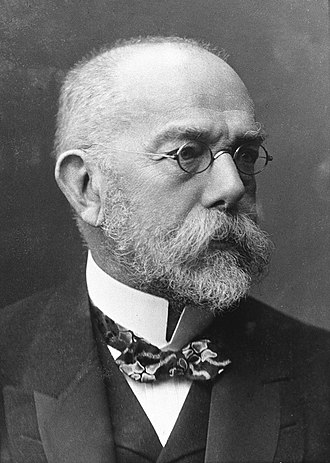
GLNobel Prize in Physiology or Medicine (1905)0
Overview
Robert Koch was a microbiology specialist who discovered the tuberculosis and cholera bacilli. Nobel Prize 1905. Established Koch's postulates for infectious disease. Based in Berlin, Germany.
For Patients
- Pioneered 3 medical techniques including Koch's postulates and Bacterial culture on solid media
- Based at Robert Koch Institute in Berlin, Germany
Biography
Robert Koch was a German physician who identified the causative agents of tuberculosis, cholera, and anthrax. He established Koch's postulates, the foundational criteria for proving a microorganism causes a disease, and won the Nobel Prize in 1905.
Affiliations & Institutions
Areas of Expertise
Pioneering Techniques
Medical Specialties
Clinical Knowledge & Procedures
Legacy Timeline
The life and contributions of Robert Koch
1876
Identified anthrax bacillus lifecycle
First to prove a specific bacterium causes a specific disease
1882
Discovered tuberculosis bacillus
Identified Mycobacterium tuberculosis as the cause of TB
1883
Identified cholera bacillus
Discovered Vibrio cholerae during an expedition to Egypt and India
1905
Nobel Prize in Physiology or Medicine
Awarded for discoveries relating to tuberculosis
Media Archive