Nobel Laureates in Medicine
Celebrating the physicians and researchers who have redefined human health through groundbreaking clinical and scientific discovery.
The Gold Standard of Medical Discovery
The Nobel Prize in Physiology or Medicine is the world's most prestigious award for medical contribution. At MDRPedia, we verify these profiles through the official Nobel Foundation records, cross-referencing their award-winning research with modern citation impact.
These individuals represent the "TITAN" tier of our registry—doctors whose work has not just treated patients, but has fundamentally altered the paradigm of clinical practice globally.
Registry of Excellence
Charles Rice
Nobel Prize. Associated with Rockefeller University.
Alfred Gilman
Alfred Gilman was an American pharmacologist who discovered G-proteins, the molecular switches that relay signals inside cells. Nobel Prize 1994.
Allan Cormack
Allan Cormack was a South African-American physicist who developed the mathematical algorithms for CT scanning independently of Hounsfield. Nobel Prize 1979.
Barbara McClintock
Barbara McClintock was an American geneticist who discovered genetic transposition (jumping genes), demonstrating that the genome is far more dynamic than previously believed. Nobel Prize 1983.

Baruj Benacerraf
Baruj Benacerraf was a Venezuelan-American immunologist who shared the Nobel Prize in 1980 for discovering the major histocompatibility complex (MHC) genes that regulate immune responses. His work on immune response genes was foundational to understanding organ transplant rejection and autoimmune diseases.
Bert Sakmann
Bert Sakmann is a German neuroscientist who developed patch clamp technique for recording single ion channel currents. Nobel Prize 1991.
Charles Brenton Huggins
Charles Huggins was a Canadian-American urologist who discovered that hormone therapy could treat prostate and breast cancer. His work on hormonal manipulation of cancer opened an entirely new approach to cancer treatment. Nobel Prize 1966.
Christiaan Eijkman
Christiaan Eijkman was a Dutch physician who discovered that beriberi is caused by nutritional deficiency, not infection. His work on polished vs unpolished rice led to the discovery of vitamins. Nobel Prize 1929.
Christiane Nusslein-Volhard
Christiane Nusslein-Volhard is a German developmental biologist who discovered the genetic mechanisms controlling embryonic development. Nobel Prize 1995.
Edward Lewis
Edward Lewis was an American geneticist who discovered how genes control the body plan of developing organisms. His work on homeotic genes revolutionized developmental biology. Nobel Prize 1995.

Eric Kandel
Eric Kandel is an Austrian-American neuroscientist who received the Nobel Prize in Physiology or Medicine in 2000 for discoveries concerning signal transduction in the nervous system and the molecular basis of memory. Using the sea slug Aplysia, he demonstrated how synaptic connections are modified during learning.
Erwin Neher
Erwin Neher is a German biophysicist who co-developed the patch clamp technique for recording ion channel activity. Nobel Prize 1991.

Ferid Murad
Ferid Murad was an American physician-pharmacologist of Albanian-Turkish descent who shared the Nobel Prize in 1998 for discovering nitric oxide as a signaling molecule in the cardiovascular system. His work led directly to the development of drugs like sildenafil (Viagra) and understanding of vasodilation.
Francoise Barre-Sinoussi
Francoise Barre-Sinoussi is a French virologist who co-discovered HIV, the virus that causes AIDS. Nobel Prize 2008.
Gertrude Elion
Gertrude Elion was an American pharmacologist who shared the Nobel Prize in 1988 for discoveries of important principles for drug treatment. She developed drugs for leukemia (6-mercaptopurine), malaria, gout, organ transplant rejection (azathioprine), and herpes (acyclovir), revolutionizing rational drug design.
Gerty Cori
Gerty Cori was a Czech-American biochemist who was the first woman to win the Nobel Prize in Physiology or Medicine (1947) for discovering the Cori cycle of glycogen metabolism.
Godfrey Hounsfield
Godfrey Hounsfield was a British electrical engineer who invented the CT scanner. His computed tomography technology revolutionized diagnostic medicine. Nobel Prize 1979.
Gregg Semenza
Gregg Semenza is an American geneticist who discovered HIF-1, the master regulator of cellular oxygen sensing. Nobel Prize 2019.
Gunter Blobel
Gunter Blobel was a German-American biologist who discovered that proteins have intrinsic signals governing their transport and localization in the cell. Nobel Prize 1999.
H. Robert Horvitz
H. Robert Horvitz is an American biologist who discovered the genetic regulation of programmed cell death (apoptosis) in C. elegans. Nobel Prize 2002.

Har Gobind Khorana
Har Gobind Khorana was an Indian-American biochemist who shared the Nobel Prize in 1968 for interpreting the genetic code and its function in protein synthesis. He was the first to synthesize a functional gene and made foundational contributions to understanding how nucleotide sequences determine amino acid assembly.
Howard Florey
Howard Florey was an Australian pathologist who developed penicillin into a practical antibiotic drug, saving countless lives in World War II and beyond. Nobel Prize 1945.
J. Michael Bishop
J. Michael Bishop is an American virologist who discovered that normal cells contain genes (proto-oncogenes) that can cause cancer when mutated. Nobel Prize 1989.
Jack Szostak
Jack Szostak is a Canadian-American geneticist who discovered how telomeres and telomerase protect chromosomes. Nobel Prize 2009.
James Rothman
James Rothman is an American cell biologist who discovered the molecular machinery for vesicle transport in cells. Nobel Prize 2013.
Jeffrey Hall
Jeffrey Hall is an American geneticist who discovered the molecular mechanisms controlling circadian rhythm. Nobel Prize 2017.
John O'Keefe
John O'Keefe is an American-British neuroscientist who discovered place cells in the hippocampus, revealing how the brain creates a map of space. Nobel Prize 2014.
John Sulston
John Sulston was a British biologist who mapped the complete cell lineage of C. elegans and led the UK contribution to the Human Genome Project. Nobel Prize 2002.

Joseph Murray
Joseph Murray was an American plastic surgeon and transplant pioneer who performed the first successful human organ transplant -- a kidney transplant between identical twins Richard and Ronald Herrick -- on December 23, 1954, at Peter Bent Brigham Hospital in Boston. His subsequent work on immunosuppression to enable transplants between non-identical individuals laid the foundation for modern organ transplantation, earning him the Nobel Prize in Physiology or Medicine in 1990.
Jules Hoffmann
Jules Hoffmann is a Luxembourgish-French immunologist who discovered the role of Toll receptors in innate immunity, founding the field of innate immune signaling. Nobel Prize 2011.
Leland Hartwell
Leland Hartwell is an American geneticist who discovered the key regulators of the cell cycle, the fundamental process by which cells divide. Nobel Prize 2001.
Linda Buck
Linda Buck is an American neuroscientist who co-discovered odorant receptors and the organization of the olfactory system. Nobel Prize 2004.

Marie Curie
Marie Curie was a Polish-French physicist and chemist who discovered radium and polonium and pioneered research on radioactivity. She was the first woman to win a Nobel Prize and the only person to win Nobel Prizes in two different sciences. Her work laid the foundation for radiation therapy in cancer treatment.

Michael Houghton
Michael Houghton is a British-Canadian virologist who was awarded the Nobel Prize in Physiology or Medicine in 2020 for the discovery of the Hepatitis C virus in 1989. His work enabled blood screening tests that have prevented millions of HCV infections worldwide.
Michael Rosbash
Michael Rosbash is an American geneticist who discovered the transcription-translation feedback loop underlying circadian rhythm. Nobel Prize 2017.
Michael Young
Michael Young is an American geneticist who discovered the timeless gene and mechanisms of circadian rhythm regulation. Nobel Prize 2017.
Oliver Smithies
Oliver Smithies was a British-American geneticist who developed gene targeting to create knockout mice and invented gel electrophoresis. Nobel Prize 2007.

Paul Ehrlich
Paul Ehrlich was a German Nobel laureate physician and scientist who pioneered the fields of hematology, immunology, and chemotherapy. He is best known for developing Salvarsan in 1910, the first effective treatment for syphilis and the first modern chemotherapeutic agent, and for his groundbreaking work on immunity that earned him the Nobel Prize in Physiology or Medicine in 1908.
Paul Greengard
Paul Greengard was an American neuroscientist who discovered how dopamine and other neurotransmitters exert their effects via signal transduction. Nobel Prize 2000.
Paul Lauterbur
Paul Lauterbur was an American chemist who invented MRI by developing the concept of using magnetic field gradients to produce two-dimensional images. Nobel Prize 2003.
Peter Mansfield
Peter Mansfield was a British physicist who made MRI practical for clinical use by developing echo-planar imaging and mathematical techniques for rapid image reconstruction. Nobel Prize 2003.
Randy Schekman
Randy Schekman is an American cell biologist who discovered genes governing vesicle traffic in cells. Nobel Prize 2013.
Richard Axel
Richard Axel is an American neuroscientist who discovered the odorant receptor gene family and the organization of the olfactory system. Nobel Prize 2004.
Robert Furchgott
Robert Furchgott was an American pharmacologist who discovered that nitric oxide (NO) is a signaling molecule in the cardiovascular system. Nobel Prize 1998.
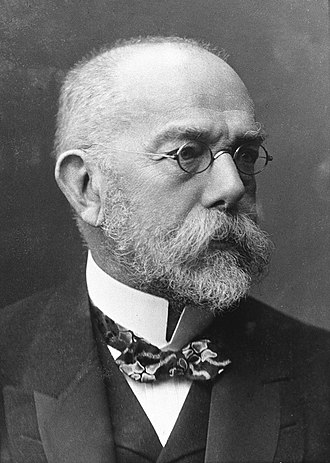
Robert Koch
Robert Koch was a German physician who identified the causative agents of tuberculosis, cholera, and anthrax. He established Koch's postulates, the foundational criteria for proving a microorganism causes a disease, and won the Nobel Prize in 1905.
Robin Warren
Robin Warren is an Australian pathologist who first observed Helicobacter pylori in gastric biopsies and proposed its link to ulcers. Nobel Prize 2005.
Ronald Ross
Ronald Ross was a British physician born in India who proved that malaria is transmitted by mosquitoes, one of the most important discoveries in medical history. Nobel Prize 1902.
Rosalyn Yalow
Rosalyn Yalow was an American medical physicist who developed radioimmunoassay (RIA), a revolutionary technique for measuring tiny quantities of biological substances. Nobel Prize 1977.
Santiago Ramon y Cajal
Santiago Ramon y Cajal was a Spanish neuroscientist who established the neuron doctrine, proving that the nervous system is made of individual cells (neurons) rather than a continuous network. He shared the Nobel Prize in 1906 and is considered the father of modern neuroscience.

Susumu Tonegawa
Susumu Tonegawa is a Japanese molecular biologist who won the Nobel Prize in 1987 for discovering the genetic mechanism of antibody diversity (V(D)J recombination). He later pivoted to neuroscience, making breakthrough discoveries in memory engram cells at MIT.
Svante Paabo
Svante Paabo is a Swedish geneticist who pioneered the field of paleogenomics by sequencing the Neanderthal genome and discovering the Denisovans. Nobel Prize 2022.
Thomas Sudhof
Thomas Sudhof is a German-American neuroscientist who discovered how nerve cells communicate via synaptic vesicle release. Nobel Prize 2013.
Tim Hunt
Tim Hunt is a British biochemist who discovered cyclins, the proteins that regulate the cell division cycle. Nobel Prize 2001.
Werner Forssmann
Werner Forssmann was a German physician who performed the first cardiac catheterization on himself in 1929, threading a catheter into his own heart. This act of self-experimentation founded interventional cardiology. Nobel Prize 1956.
Wilhelm Rontgen
Wilhelm Rontgen was a German physicist who discovered X-rays in 1895, revolutionizing medical diagnosis. He received the first Nobel Prize in Physics in 1901 and refused to patent his discovery, ensuring its free use for medical purposes worldwide.
William Kaelin
William Kaelin is an American physician-scientist who discovered how cells sense and adapt to oxygen availability, revealing the VHL-HIF pathway. Nobel Prize 2019.

Wu Lien-teh
Wu Lien-teh was a Malaysian-Chinese physician who stopped the Manchurian plague epidemic of 1910-1911, the first person to identify pneumonic plague transmission by respiratory droplets. He invented the modern surgical face mask and was the first person of Chinese descent nominated for the Nobel Prize.
Yoshinori Ohsumi
Yoshinori Ohsumi is a Japanese cell biologist who discovered the mechanisms of autophagy, the cell's recycling system. Nobel Prize 2016.
Youyou Tu
Youyou Tu is a Chinese pharmaceutical chemist who discovered artemisinin, extracted from sweet wormwood, which revolutionized malaria treatment and saved millions of lives. Nobel Prize 2015.
The Selection Process
Inside the Karolinska Institute
The process of selecting a Nobel Laureate begins long before the October announcement. In September of the preceding year, the Nobel Committee sends confidential invitations to qualified nominators—members of the Nobel Assembly, previous Laureates, and professors at selected universities worldwide. No one can nominate themselves.
Candidates are then screened by the Nobel Assembly at the Karolinska Institute in Sweden. The key criterion is not a lifetime of good service, but a "discovery or improvement that has conferred the greatest benefit on mankind." This distinction is crucial: a great surgeon may save thousands of lives, but a Laureate discovers the mechanism that allows millions to be saved.
A Century of Progress
- 1901Emil von Behring for serum therapy against Diphtheria
- 1945Fleming, Chain, and Florey for the discovery of Penicillin
- 1962Crick, Watson, and Wilkins for the structure of DNA
- 2023Karikó and Weissman for mRNA vaccine technology
Why This Matters to Patients
When you see a "Nobel Laureate" badge on an MDRPedia profile, you are looking at a scientist whose work is foundational to modern medicine. These individuals often lead advanced clinical trials and are at the absolute cutting edge of therapeutic possibilities.
For patients with rare or "incurable" conditions, seeking care at an institution led by a Laureate can offer access to experimental protocols years before they become standard practice.
Frequently Asked Questions
How are Nobel Laureates verified on MDRPedia?
We verify all laureates using the official Nobel Prize database (NobelPrize.org) and match them against their unique scientific identifiers (ORCiD/Scopus) to ensure data integrity.
Are all Nobel winners in medicine listed?
Our registry focus is on pioneers with significant clinical or public health impact. While we ingest all medical laureates, we prioritize those with active research citations and modern clinical relevance.